Free guide + free class
Why your no keeps turning into a maybe
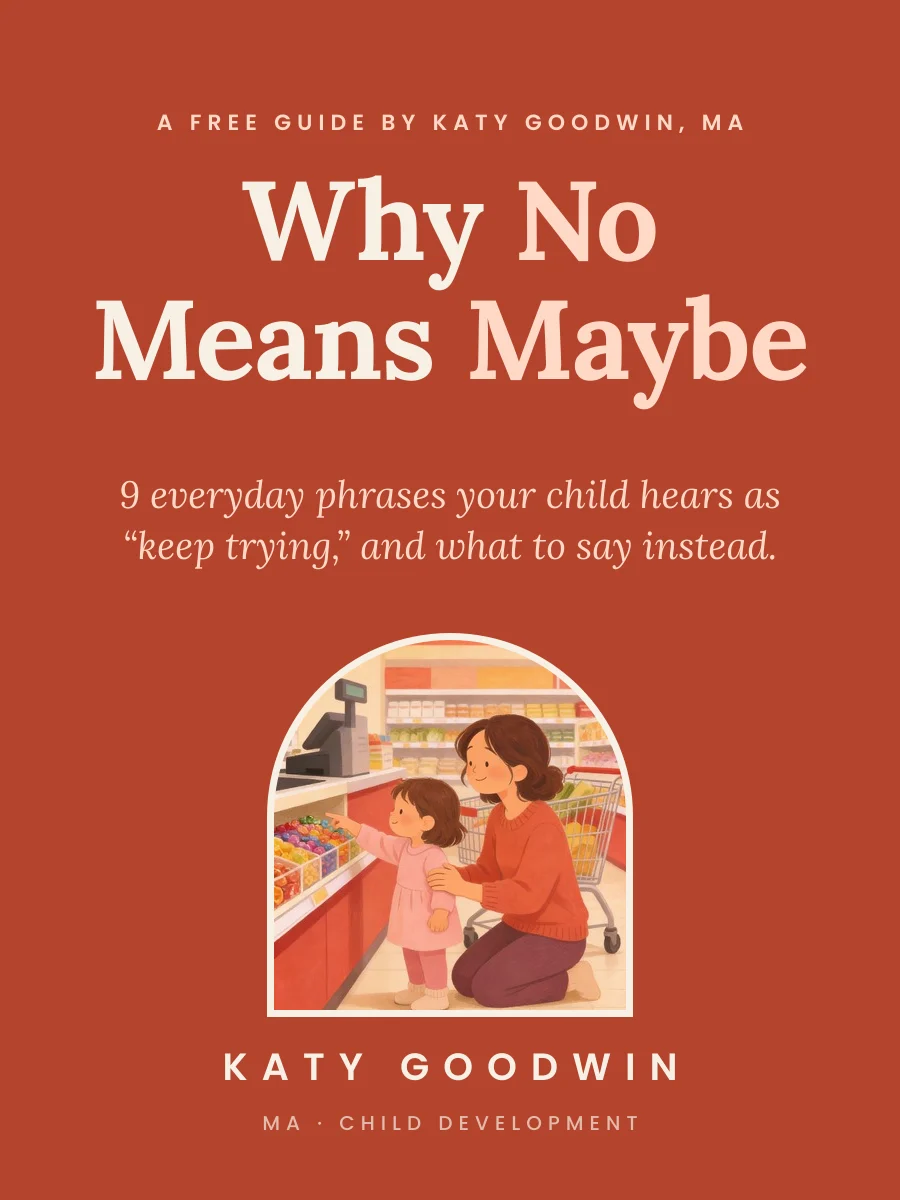
Nine everyday phrases tell your child the answer might still change. Most of them sound kind. The guide shows all nine, and what to say instead.
Free · PDF
Why No Means Maybe
A free guide by Katy Goodwin, MA. 11 pages, ages 3 to 9. My free 11 minute class follows by email.
Where should I send it?
You already know the 7:40 version of this
You said no in a good voice. Your child asked again. You said “we’ll see,” then explained, then, because the fight cost more than the thing itself, “okay, just this once.”
Nothing in that evening looks like bad parenting. But a no that moves even sometimes works like a lottery. Your child keeps buying tickets, louder and longer, because one of them might win.
The tickets are sold in small, kind words. That is why they are so easy to miss.
What’s inside
- The nine phrases, from “okay?” at the end of a request to “go ask Dad,” and what your child hears in each one.
- What to say instead, word for word, for all nine.
- Why a no that moves even once in a while makes a child push harder and longer.
- Your first week, day by day, including the day it gets louder before it gets better.
About ten minutes of reading. You can swap the first phrase tonight.
From parents who read my book
“It really felt down-to-earth and relatable. There was no stress about being the perfect parent, just straightforward guidance and practical examples. Even little tweaks made things a lot more peaceful for us.”
“My kid isn’t really a handful, but there were definitely a few things we didn’t address. The book is super practical and it really does what it promises.”
Why No Means Maybe comes from Chapter 6 of my book, The Boundary System. Katy Goodwin holds a Master’s in Child Development from East Bridge University.
Free · PDF
Why No Means Maybe
A free guide by Katy Goodwin, MA. 11 pages, ages 3 to 9. My free 11 minute class follows by email.